
Cupping, Acupuncture, Electroacupuncture, Moxa, and Dry Needling: What's the Difference?
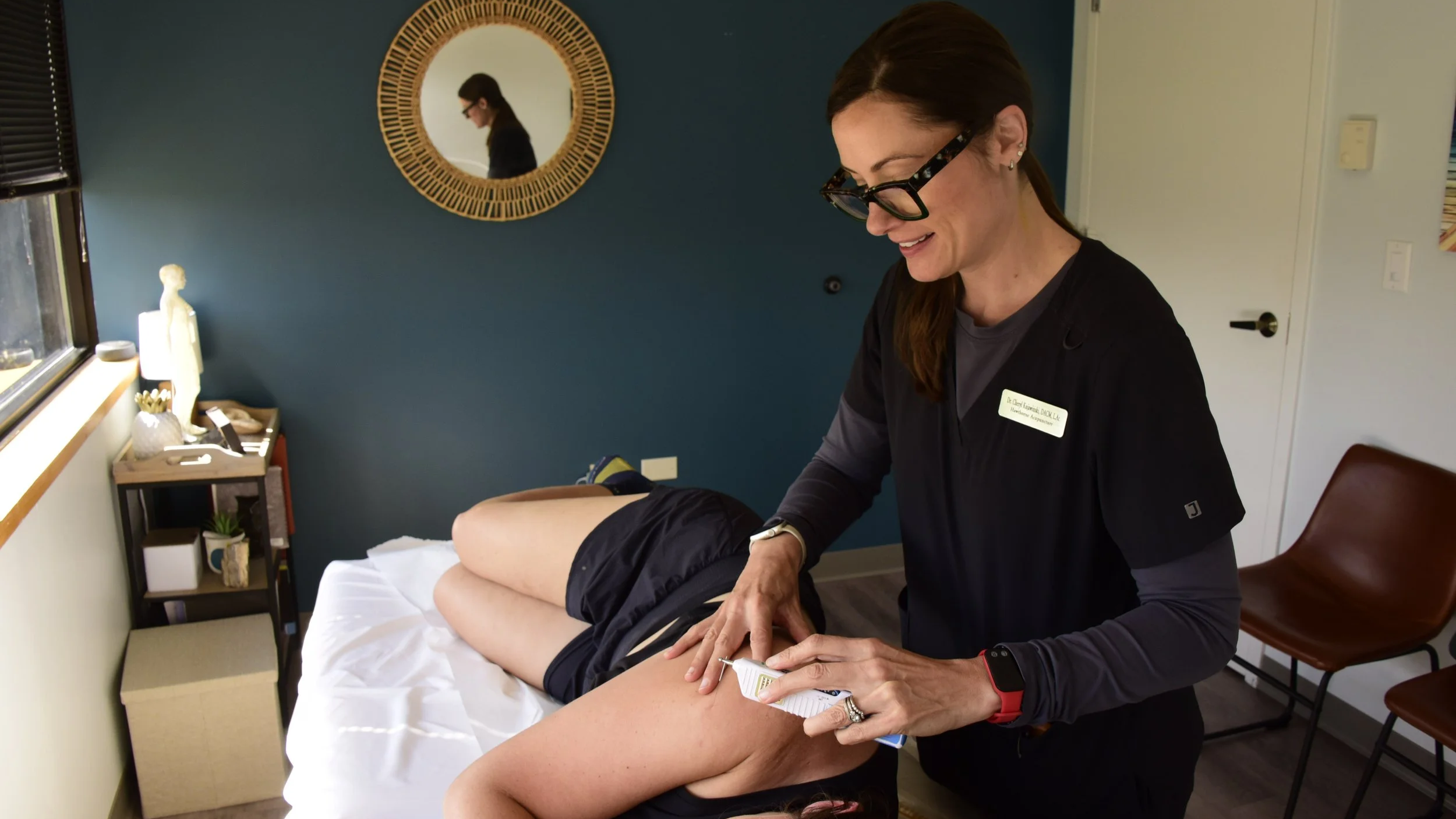
Patients often come in having heard of most of these treatments individually, but not always sure how they're different, or which one actually applies to what they're dealing with. Here's a straightforward breakdown of the main modalities we use, what each one is, and where it tends to help most.
Acupuncture
This is the foundation. Thin, sterile needles are inserted at specific points to influence the flow of oxygen and blood flow, and address a wide range of concerns; from pain and stress to digestive issues and fertility support. In my practice, this often takes an orthopedic, anatomy-first approach alongside the traditional pattern-based diagnosis, meaning I'm assessing the specific muscles, joints, and movement patterns involved, not just working from theory alone.
Electroacupuncture
Once needles are in place, small clips connect them to a device that sends a gentle pulsing current between two points. This isn't shocking or uncomfortable. Most people describe it as a light tapping, pulsing or muscle twitching. Electroacupuncture is especially useful for pain conditions and for muscles that have gone quiet from inhibition (a common issue after injury or chronic pain), since the steady stimulation helps reactivate them in a way manual needling alone often can't. We also commonly use electroacupunctre for fertility patients to help with blood flow to the reproductive organs.
Dry Needling
Dry needling uses some of the same needles as acupuncture, but the approach is narrower and more targeted: needling directly into a myofascial trigger point (a tight, irritable knot in a muscle) to release it. I often use dry needling along with acupuncture and electroacupuncture for orthopedic patients who need pain relief and need their muscle function restored. It's rooted more in modern musculoskeletal anatomy than traditional Chinese medicine theory, and it's often what I reach for with a specific, localized muscle problem, like a stubborn knot in the upper trap or glute.
Cupping
Cupping uses suction, typically glass or silicone cups, to lift the skin and superficial muscle layer, increasing local blood flow and helping release tight, restricted tissue. It's the treatment behind those circular marks people sometimes ask about, which are just from the suction pulling blood to the surface, not a burn or a bruise. Recent research on cupping for low back pain has found it can meaningfully reduce pain in the short term, especially compared with medication or usual care, though the effect tends to fade by the three to six month mark and study quality varies. It's a genuinely useful tool for acute tightness and pain, best thought of as one part of a broader plan rather than a standalone fix.
Moxibustion
Moxibustion involves burning a small amount of the herb mugwort near or on specific points to warm the area and support the flow of Qi and Blood. It's traditionally used for conditions with a "cold" or deficient presentation, things like a sluggish digestive system, cold hands and feet, or certain fertility-related patterns, and it's one of the more distinctly traditional tools in the Chinese medicine toolkit. Most patients find the warmth genuinely relaxing rather than intense.
Which One Do You Need?
Most treatment plans use more than one of these together. A low back pain visit, for example, might combine orthopedic acupuncture with electroacupuncture on the deep stabilizers and a round of cupping for surface tightness. A fertility-focused visit might lean more on traditional acupuncture and moxibustion. Part of my job is figuring out which combination actually fits what's going on with you, rather than running the same protocol on everyone.