
Acupuncture for Sleep: What Chinese Medicine Sees and What the Research Says
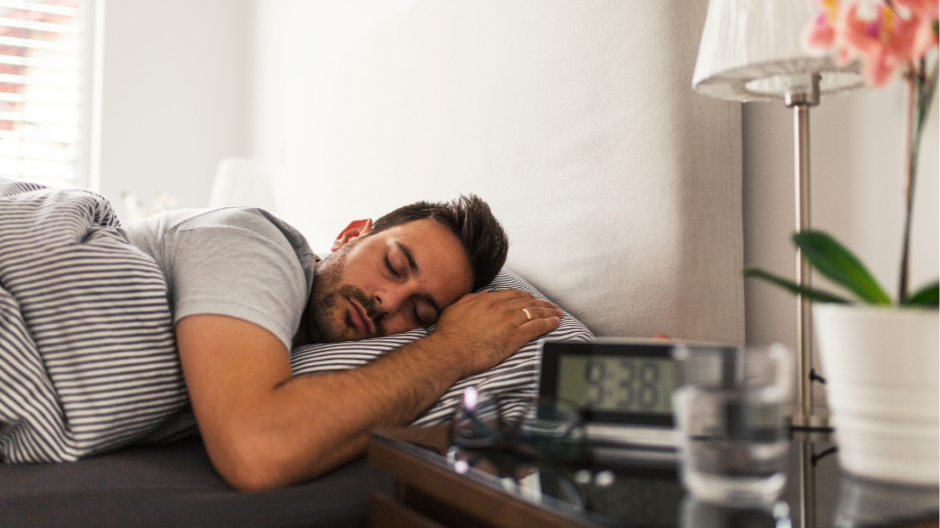
If you're lying awake at 2 a.m. running through tomorrow's to-do list, you're far from alone. Poor sleep is one of the most common reasons people try acupuncture, and it's a topic worth looking at honestly: what Chinese medicine makes of it, what the research actually shows, and what you can do at home in the meantime.
How Chinese Medicine Looks at Sleep
In Chinese medicine, sleep isn't just about being tired. It's about whether your Shen (your mind or spirit, which is said to be housed in the Heart) can settle at night. A few common patterns come up again and again:
Stress and stuck Qi. A busy, wound-up mind that can't switch off, often with irritability or tension in the shoulders and jaw.
Not enough Yin or Blood. Not enough "cooling, anchoring" energy to settle the mind, which often looks like falling asleep fine but waking in the night, feeling restless or overheated.
Digestion that's off. Eating late or heavy can leave the body too busy to rest, which is why a sluggish stomach and restless sleep so often travel together.
What the Research Actually Shows
Compared with placebo acupuncture, an analysis of 10 trials (757 people with chronic insomnia) found acupuncture improved how people rated their own sleep quality. Objective measures were more mixed: total sleep time didn't differ significantly, though sleep efficiency and time spent awake after falling asleep did improve.
Compared with sleep medication, a larger analysis of 64 trials (4,443 patients) found several acupuncture approaches improved sleep quality scores more than hypnotic medication, with the best results when acupuncture was combined with moxibustion or ear acupuncture.
Beyond nighttime sleep, a review of 18 trials (1,767 patients) found moderate-quality evidence that acupuncture reduced insomnia severity, and improved memory, sleep quality, and fatigue.
Possible mechanism. A 2026 analysis of 12 trials suggests acupuncture may influence melatonin and cortisol, the hormones that help regulate your sleep-wake rhythm. That's an early clue rather than a settled explanation.
Build a Wind-Down Routine
Acupuncture tends to work best when the rest of your day sets your body up for sleep. In Chinese medicine, evening is the time for the body to turn inward and settle, and what is presented below is a recipe for a better nights rest!
Earlier in the evening
Finish dinner at least 3 hours before bed, and go easy on heavy or spicy meals late in the day.
Finish exercise at least 3 hours before bed. Movement during the day helps sleep, so this is about timing, not skipping it.
Cut off caffeine early. It is suggested to avoid coffee for 5 or more hours before bed, and longer if you're sensitive.
Go easy on alcohol. It may help you fall asleep, but it can disturb your sleep later in the night, so finish it several hours before bed.
The last hour
Phones and screens off at least 30 minutes before bed. The light from backlit screens can make it harder to fall asleep.
Treat the hour before bed as a landing strip. Dim the lights, and skip work email and stressful conversations.
Do something calming, like a warm bath or a relaxing book.
Try a little self-acupressure. This is a traditional, low-risk way to signal that the day is done. It hasn't been studied as thoroughly as needling, so think of it as a calming habit rather than a treatment.
HT7 (Shenmen): on the pinky side of your inner wrist crease, in the small hollow beside the tendon. Press gently and hold for about a minute on each wrist.
Yintang: the spot right between your eyebrows. Use light, slow circles for a minute.
Your bedroom
Keep it cool. Somewhere around 65 to 68°F works well for most people.
Keep it dark and quiet. Light-blocking curtains help if outside light shines in.
Save it for sleep. Try to avoid working or scrolling in bed.
Keep it consistent
Go to bed and get up at about the same time every day, including weekends.
Keep naps to half an hour or less, and not too late in the day.
If sleep has been slipping and you'd like a plan built around what's behind it for you, we're here to help. We're located in Centennial and see patients throughout the south Denver metro area, including Highlands Ranch, Lone Tree, Parker, and Aurora. Book a visit.
This post is for educational purposes only and is not medical advice. Acupuncture is a supportive therapy and does not replace care from your physician. Individual results vary, and no outcome is guaranteed.
(Qaseem A, Kansagara D, Forciea MA, Cooke M, Denberg TD, 2016), (Acupuncture for chronic insomnia disorder: a systematic review with meta-analysis and trial sequential analysis, 2025), (The efficacy and safety of multiple acupuncture therapies in primary insomnia, 2025), (Beyond night time symptoms: acupuncture for daytime dysfunction improvement in insomnia, a meta-analysis, 2026), (Hu Y, Liu Y, Li W, Wang Y, 2026)