
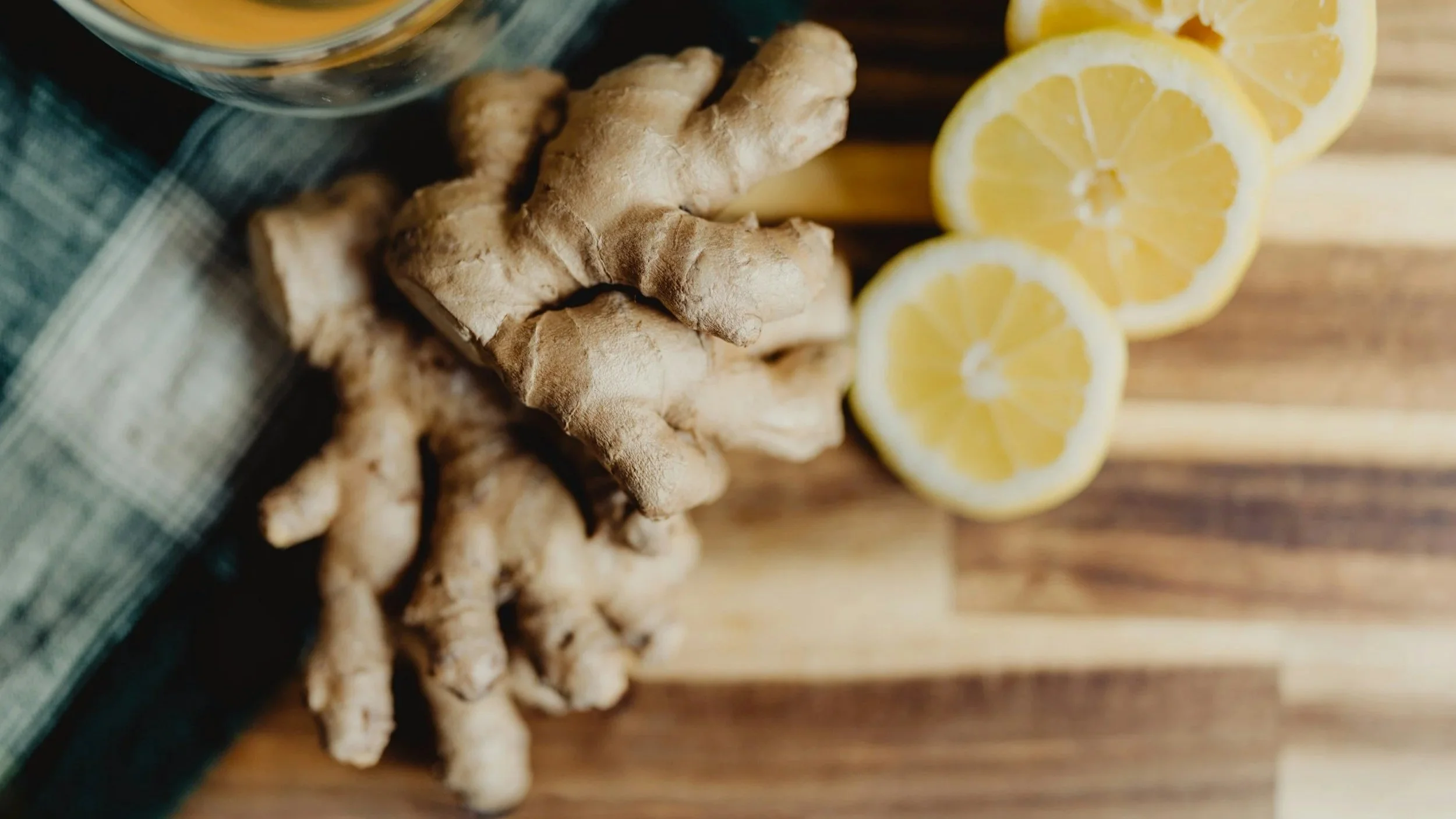
In Chinese medicine, food and medicine aren't two separate things. Every food has its own qualities: a temperature (warming or cooling), a flavor, and a direction it moves in the body. What you eat can nudge your body toward balance or away from it, which is why the kitchen is considered one of the most powerful places to start.
Ginger is one of the simplest examples of this idea in action, and it's a perfect fit for the colder months.
Ginger in Chinese Medicine: More Than a Kitchen Spice
In Chinese medicine, ginger is warm, pungent, and activating. It has a special affinity for the Spleen, Stomach, and Lung, which is why it's so often used for digestion and for congestion. Its warmth supports the digestive system, and its sharp, aromatic quality helps clear dampness and phlegm, whether that shows up in your belly or in your chest.
That's a big part of why ginger appears in so many traditional recipes and herbal formulas. It works on more than one area at once.
Fresh, Dried, and Prepared: Different Forms, Different Jobs
How ginger is prepared changes what it does, which is one of the more interesting parts of how it's used in Chinese medicine.
Fresh ginger (Sheng Jiang) is the one most people keep in the fridge. It's traditionally used to:
Support digestion
Settle nausea
Help the body push off a cold that's just starting to settle in
Gently warm the body and get things moving
Dried ginger (Gan Jiang) is stronger and hotter. It's traditionally used when:
The body feels cold from the inside, like cold hands and feet
Digestion is weak or sluggish
You tend to feel worse after cold foods and drinks
What Modern Research Says
Ginger is one of the better-studied kitchen remedies, though its benefits are more specific than its reputation:
Settling nausea. This is ginger's best-known use, and it's especially helpful for morning sickness. It can also help with nausea after surgery or during chemotherapy.
Easing achy joints. It can offer a small amount of relief for knee pain from osteoarthritis.
Softening menstrual cramps. Some women find it helps take the edge off period pain.
It's also worth being honest about what isn't proven. There isn't strong evidence that ginger prevents or treats colds, and it isn't a reliable fix for motion sickness, so think of a warm cup at the first chill as a soothing, traditional habit rather than a cure.
Simple Ways to Use It
Ginger doesn't have to be complicated:
Fresh ginger tea. Simmer a few slices in hot water for about 10 minutes, with honey or lemon if you like.
Ginger and scallion tea. For the first day of a chill-type cold, add the white part of a scallion to your ginger tea, sip it hot, and stay warm.
In your cooking. Grate it into soups, broths, congee, and stir-fries. It pairs especially well with a turmeric chicken and vegetable soup.
When you feel bloated, sluggish, or queasy. A warm cup after a meal is a gentle, traditional way to help your digestion along.
Chews, candies, or capsules. These can be handy for nausea. Most studies used capsules or powder rather than tea, so food and tea are lovely everyday habits but not the same as a measured dose.
Food as Medicine Is About Your Patterns
Ginger is wonderful, but it isn't a one-size-fits-all fix. In Chinese medicine, the goal isn't to find a single "superfood." It's to understand your own patterns and choose foods that help bring you back into balance.
If you're not sure where to begin, start small. Add a slice of ginger to hot water, and notice how your body responds.